
Basil
Health Benefits of Basil
Ocimum basilicum | Evidence-Based Overview
Revered as the "King of Herbs" across Mediterranean, Indian, and Southeast Asian traditions, basil has been cultivated for over 5,000 years for both culinary and medicinal purposes. Its cousin holy basil (tulsi) is the most sacred plant in Ayurvedic medicine — but common sweet basil is itself richly therapeutic. Key bioactive compounds include linalool, eugenol, rosmarinic acid, apigenin, luteolin, beta-caryophyllene, and a dense array of volatile oils that drive its anti-inflammatory, antimicrobial, adaptogenic, and neuroprotective properties.
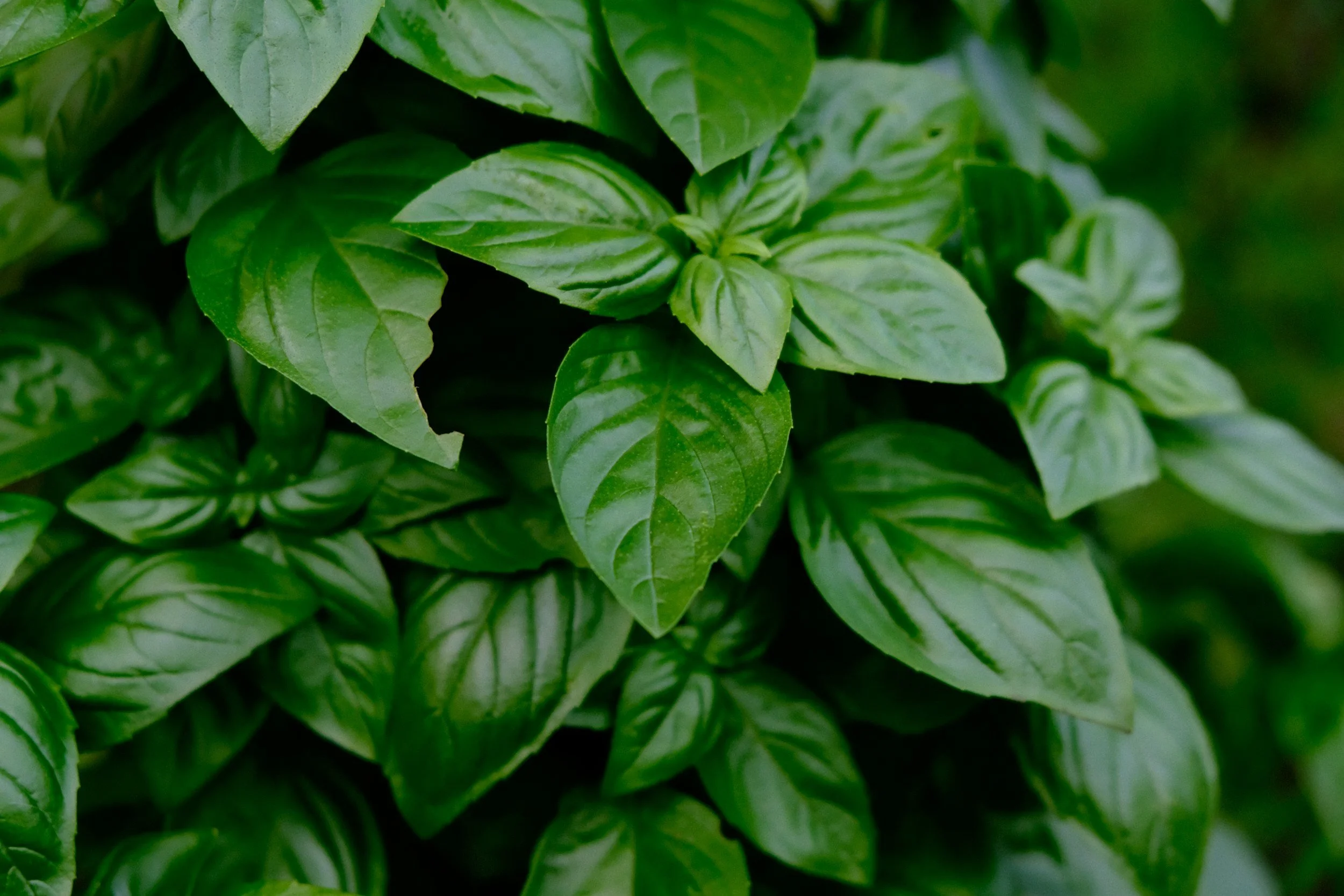
photo by Yakov Leonov
Anti-Inflammatory & Antioxidant
• Eugenol inhibits COX-1 and COX-2 enzymes, similar to ibuprofen
• Rosmarinic acid is a potent scavenger of multiple free radical types
• Beta-caryophyllene activates CB2 receptors, reducing inflammation
• Reduces CRP, TNF-alpha, and IL-6 systemic inflammatory markers
• Apigenin and luteolin suppress NF-kB inflammatory pathway
Antimicrobial & Antifungal
• Linalool and eugenol disrupt bacterial cell membranes
• Active against E. coli, Listeria, Staph, and Salmonella
• Broad antifungal activity against Candida and Aspergillus
• Antiviral properties shown against herpes simplex and adenoviruses
• Natural food preservative shown to extend shelf life and safety
Stress, Mood & Adaptogenic Effects
• Beta-caryophyllene activates endocannabinoid CB2 receptors
• Reduces cortisol and perceived stress in clinical studies
• Linalool has anxiolytic effects via GABA receptor modulation
• Rosmarinic acid shown to reduce anxiety in multiple studies
• Adaptogenic properties support resilience to physical and mental stress
Cardiovascular Health
• Eugenol relaxes blood vessel walls, lowering blood pressure
• Magnesium content supports heart rhythm and vascular function
• Rosmarinic acid inhibits platelet aggregation and clot formation
• Antioxidants protect LDL from oxidation and arterial damage
• Beta-caryophyllene reduces cardiac inflammation
Blood Sugar & Metabolic Health
• Lowers fasting blood glucose and post-meal glucose spikes
• Improves insulin sensitivity and glucose uptake in cells
• Inhibits alpha-glucosidase, slowing carbohydrate digestion
• Reduces HbA1c in type 2 diabetic models over time
• Anti-inflammatory activity addresses metabolic syndrome drivers
Brain & Cognitive Health
• Linalool and apigenin protect neurons from oxidative damage
• Rosmarinic acid reduces neuroinflammation in aging brain tissue
• Apigenin shown to promote neuron growth and connectivity
• Beta-caryophyllene may support mood via endocannabinoid pathway
• Traditional Ayurvedic use as a memory and focus tonic
Digestive & Liver Health
• Carminative: relieves bloating, gas, and intestinal cramping
• Eugenol stimulates digestive enzyme secretion
• Antimicrobial against H. pylori and gut pathogens
• Rosmarinic acid protects liver cells from oxidative damage
• Supports bile production for fat digestion and toxin clearance
Immune, Skin & Eye Health
• Vitamin K and vitamin A content support immune cell production
• Beta-carotene converts to vitamin A, protecting retinal health
• Lutein and zeaxanthin reduce risk of macular degeneration
• Anti-inflammatory compounds reduce skin redness and acne
• Topical basil oil used for wound healing and skin infections
Cancer Research
promising — primarily preclinical findings
Apigenin is one of the most thoroughly researched plant flavonoids in cancer science, with documented activity across breast, colon, prostate, thyroid, and leukemia cell lines — inducing apoptosis, inhibiting proliferation, and sensitizing cancer cells to chemotherapy. Luteolin adds complementary anti-tumor activity, particularly in suppressing tumor cell migration and invasion relevant to metastasis. Rosmarinic acid inhibits angiogenesis, cutting off the blood supply tumors depend on. Beta-caryophyllene, via CB2 receptor activation, has shown anti-tumor activity in glioma and breast cancer models. Eugenol contributes further apoptosis-inducing and NF-kB-suppressing activity. Basil's multi-compound profile across several independent cancer-relevant pathways makes it one of the more scientifically interesting culinary herbs.
Practical Notes
Best forms: Fresh leaves (highest volatile oil content); dried basil (concentrated rosmarinic acid); holy basil / tulsi (strongest adaptogenic effects).
Key tip: Add fresh basil at the end of cooking — heat destroys volatile oils including linalool and eugenol; dried basil tolerates cooking better for rosmarinic acid.
Cautions: Generally very safe at all culinary doses; high supplemental doses may interact mildly with blood thinners; estragole in basil oil is restricted in some supplements in the EU at high concentrations.
Disclaimer: This information is for educational purposes only and does not constitute medical advice. Consult a qualified healthcare provider before using basil therapeutically.